
Nov 20, 2026
How to Choose a Saffron Stigma Powder Supplier?
Saffron is one of the most contaminated botanicals in the world; thus, the choice of source is the most crucial decision any business that wishes to utilize it has to make. For teams creating women’s health goods like mood-and-lifestyle mixes, gummies, drinks, and internal-beauty formulations, a saffron stigma powder that’s genuine, standardized, and regularly accessible safeguards both the recipe and the brand’s image. This tutorial will show what to look for in the specification, how to evaluate authentication and safety data, and which supplier competencies are important for long-term B2B supply, using Femvora’s saffron stigma extract powder as a working example. It is a source and formulation business. The finished goods phase has to be validated against the regulations of each target market.
What Should You Look for in a Saffron Stigma Powder Specification?
Active Markers and Standardization Grades
"Begin with the markers. Saffron stigma powder is often standardized for crocin and safranal. Femvora’s regular factory spec is 3% crocin, 1% safranal, CAS number 84604-17-1, and orange-red powder appearance. The technical data sheet additionally specifies minimum levels of crocin ≥5% and safranal ≥0.2% by HPLC, and a 20:1 extract ratio; the product benefit comments include another set of values (crocin≥3%, safranal ≥0.3%). These numbers vary depending on the original material; thus, the grade to be published should be validated with Femvora before usage. For brands of women’s wellness products, a precisely established marker level forms the basis for dosage, stability plans, and label values.
Physical Data That Affect Formulation
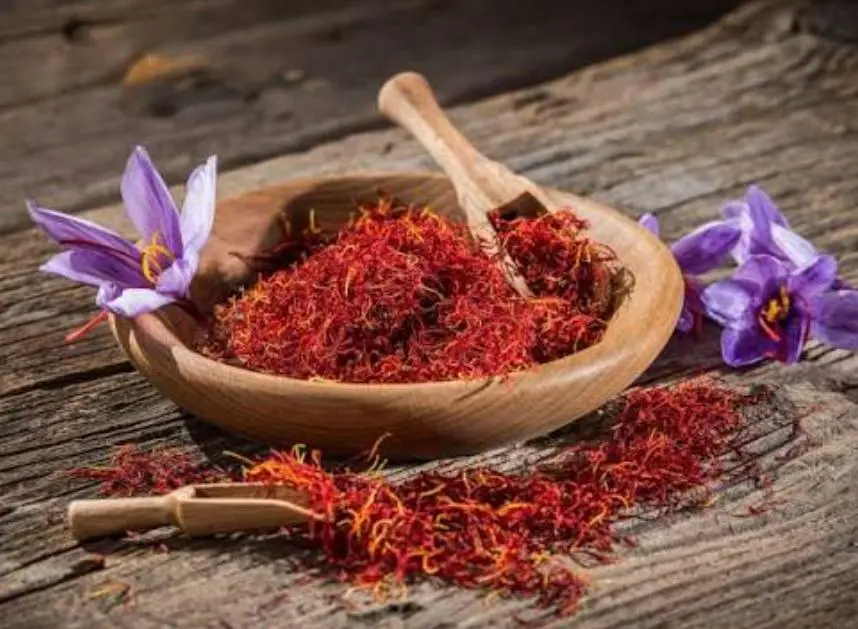
Physical data determine the smoothness of powder flow in manufacturing. Femvora saffron stigma powder is an orange-red powder, 100% passing through 80 mesh, loss on drying ≤5.0%, residual on ignition ≤6.0%. Fine, homogeneous particles mix smoothly with elements popular in women’s formulae – including magnesium, B vitamins, collagen peptides and probiotics – and they make filling capsules and stick packs more predictable. The source also specifies a moderate, sweet-woody scent and excellent dispersion in drinks, which may be confirmed by formulators in their own matrices by pilot testing and sensory assessment.
Packaging, Stock and Shelf Life
The words have a bearing on cost and risk. Femvora saffron stigma powder Packaging Details: 1 kilogram aluminum foil bags and 25 kg fiber or plastic drums. Minimum Order Quantity: 1 kg. Free samples available. Ready stock for rapid dispatch. Shelf life is 24 months when stored in a hermetically sealed container in a cool, dry, and dark environment away from intense light and high temperatures. That window allows brand owners the flexibility to organize manufacturing around launches and seasonal promotions. When considering providers of saffron stigma powder, inquire how the container protects it from light and moisture, and if stability statistics reflect the stated shelf life.
How Do You Verify Authenticity, Safety and Compliance?
Authentication and Adulteration Control
The main concern with saffron is adulteration. Common adulterants include safflower, maize silk, and colored starch; therefore, a vendor should be able to tell you how identification is verified. In Femvora’s source material, there is a specialized manufacturing line, microscopic inspection, and DNA barcode testing, along with an authenticity report with each shipment. Before quoting in marketing, these facts should be verified with Femvora, including the extent of testing for every batch. When investigating any saffron stigma powder vendor, ask for authentication documentation accompanying the HPLC COA, since a good marker result alone doesn't ensure no added color or fillers are there.
Contaminant Limits and Microbial Standards
Women’s vitamins are commonly used daily; therefore, safety data merits rigorous scrutiny. The standard for this saffron stigma powder is total heavy metals at ≤10 ppm, lead ≤2.0 ppm, arsenic ≤2.0 ppm, mercury ≤0.1 ppm, and cadmium ≤1.0 ppm. Microbial limits: total plate count ≤1000 CFU/g, yeast and mold ≤100 CFU/g, negative for E. coli and Salmonella. Pesticide residues are said to meet EU food safety regulations. Check each restriction against your own acceptance standards and the regulations of your target markets and inquire how each is assessed.
Certifications and Document Packages
Documentation is a product attribute. Femvora advertises ISO, Kosher, and Halal certifications for their saffron stigma extract powder, plus FDA-related, ISO 9001, and food-safety management documents or additional certificates on request. The full scope of each certificate, including the standard indicated as “ISO2200” in the source material, must be checked with Femvora before publishing. The package is complete with COA, MSDS, and TDS documentation, and every batch is traceable from raw material procurement to shipping. Please make sure you check validity dates and that the certificates cover the real production site. Retailers and marketplaces may typically ask for certificates during onboarding.
Which Supplier Capabilities Matter Most for Women’s Wellness Brands?
Integrated Manufacturing, R&D and Customization
The reliability of a provider of saffron stigma powder relies exclusively on its process control. Femvora is a fully integrated producer, with in-house extraction, fermentation, encapsulation, and finished product OEM. There are no intermediaries between the customer and the production line. Its R&D team has over 10 years of expertise in natural product purification, and the firm has distinctive patents in fermentation, encapsulation, and purification. Custom extract ratios are available on request from the technical staff. For women’s health brands, this means saffron may be produced with complementary nutrients, such as chelated magnesium or zinc, under one quality standard. Factory visits, films of production and on-site audits are offered.
Supply Stability, Pricing and Flexible Orders
Supply planning is important since saffron prices might fluctuate depending on the crop. The source material refers to one-year fixed-price contracts with growing bases and a year’s worth of raw-material inventory. Femvora says that annual contracts can stabilize prices against market volatility. “The specific source and inventory terms should be verified with Femvora before publication.” Buyers may start small: the MOQ is 1 kilogram, free samples range from 20g to 1 kg, and there are tiny OEM trial runs. A women’s health company may combine buying for a whole line with a one-stop catalog of botanicals, functional monomers, chelated minerals, probiotics, and liposomes.
Logistics, Customs Support and After-Sales Care
Delivery seals the circle of dependability. Femvora distributes saffron stigma powder from ready stock, door-to-door for small orders using DHL, FedEx, or UPS, and for large orders via air, sea, or rail with FOB, CIF, DDU, and DDP terms available. Heat-sensitive goods are sent in insulated, moisture-proof packaging and may be shipped by sea freight in monitored reefer containers. The team has knowledge of EU, US, Southeast Asian, and Middle Eastern food rules and pre-screens labels and ingredients to minimize the danger of detention and creates customs declarations, certificates of origin, and health certificates. Strong relationships with prominent carriers mean fast processing of claims for damaged or missing cargo.

Conclusion
You want to make sure that the saffron stigma powder provider has standardized indicators, authentication records, restrictions on contaminants, certifications, and a stable supply. Femvora combines them with in-house production, depth of R&D, flexible MOQs, and worldwide logistics. For firms making women’s wellness goods, it provides a well-documented, reliable base, and final label text abides by the requirements of each target market.
FAQ
1. What is the specification of Femvora’s saffron stigma extract powder?
The standard factory specification is 3% crocin and 1% safranal, with CAS number 84604-17-1, in an orange-red powder. Other values appear in the technical data, so the grade should be confirmed per project.
2. What are the MOQ and packaging options?
The MOQ is 1 kg. Packaging is 1 kg aluminum foil bags or 25 kg fiber or plastic drums. Free samples are available, and the product is in stock.
3. How should saffron stigma powder be stored?
Keep it hermetically sealed in a cool, dry, dark area, away from strong light and high temperatures. Shelf life is 24 months.
4. How is authenticity addressed?
Femvora’s materials describe dedicated production, microscopic examination, and DNA barcode testing, with an authentication report per shipment. Please confirm the scope with Femvora.
5. Is it suitable for women’s wellness products?
It can be formulated into capsules, gummies, beverages, and blends developed for women’s wellness lines. All claims must comply with local regulations, and no medical or disease-related claims should be made.
Ready to Choose Your Saffron Stigma Powder Supplier?
If you are developing a women’s wellness product and want a dependable source of saffron stigma powder, Femvora is ready to help. Share your target market, dosage form, and quality requirements, and our team will prepare a free sample, send the latest COA and authentication information, and discuss custom specifications, OEM options, or annual supply contracts. We can also arrange a factory audit so your QA team sees the process firsthand. Email us at femvora@landnutra.com to request a quote and start your next formula with confidence.
References
1. Melnyk JP, Wang S, Marcone MF. Chemical and biological properties of the world’s most expensive spice: saffron. Food Research International. 2010;43(8):1981-1989. https://doi.org/10.1016/j.foodres.2010.07.033
2. Bathaie SZ, Mousavi SZ. New applications and mechanisms of action of saffron and its important ingredients. Critical Reviews in Food Science and Nutrition. 2010;50(8):761-786. https://doi.org/10.1080/10408390902773003
3. Srivastava R, Ahmed H, Dixit RK, Dharamveer, Saraf SA. Crocus sativus L.: a comprehensive review. Pharmacognosy Reviews. 2010;4(8):200-208. https://doi.org/10.4103/0973-7847.70919
4. Moshiri M, Vahabzadeh M, Hosseinzadeh H. Clinical applications of saffron (Crocus sativus) and its constituents: a review. Drug Research. 2015;65(6):287-295. https://doi.org/10.1055/s-0034-1375681
5. Agha-Hosseini M, Kashani L, Aleyaseen A, et al. Crocus sativus L. (saffron) in the treatment of premenstrual syndrome: a double-blind, randomised and placebo-controlled trial. BJOG. 2008;115(4):515-519. https://doi.org/10.1111/j.1471-0528.2007.01652.x
6. Hausenblas HA, Saha D, Dubyak PJ, Anton SD. Saffron (Crocus sativus L.) and major depressive disorder: a meta-analysis of randomized clinical trials. Journal of Integrative Medicine. 2013;11(6):377-383. https://doi.org/10.3736/jintegrmed2013056
Online Message